

Architectural security screening: designing safer buildings with Perforated and expanded meta
Architects today design for far more than form and function. In 2025, buildings must respond to increased urban density, mixed-use developments, and heightened expectations around safety and security—without compromising aesthetics or public accessibility.
While architects carefully consider how people should move through and use a space, buildings are also experienced by people with very different intentions. Burglars, vandals and trespassers often read architecture in unintended ways—identifying climb points, concealed access routes and vulnerable edges. This is where security-conscious architectural design becomes essential.
Through decades of collaboration with architects, engineers and builders, Webforge Locker has seen firsthand how material choice and detailing can either reduce or unintentionally enable security risks.
Designing With Security in Mind from the Start
You can’t predict every behaviour once a building is occupied—but you can significantly reduce opportunities for intrusion through informed design decisions.
This is why early integration of security-focused architectural products is critical. Webforge Locker works with project teams to ensure security measures are incorporated seamlessly into façades, fencing, balustrades and screening systems—rather than added as visual afterthoughts.
Across infrastructure, transport, education and commercial projects, Webforge Locker solutions are commonly used to:
- Define boundaries without creating fortress-like environments
- Maintain visibility while restricting access
- Prevent climbing and forced entry
Perforated and Expanded Metal as Security Architecture
One of the most effective tools in security-conscious design is architectural perforated and expanded metal.
When integrated into façades, screens and fencing, these materials:
- Act as physical barriers without blocking light or airflow
- Reduce climbing opportunities through controlled aperture sizes
- Support passive surveillance by maintaining sightlines
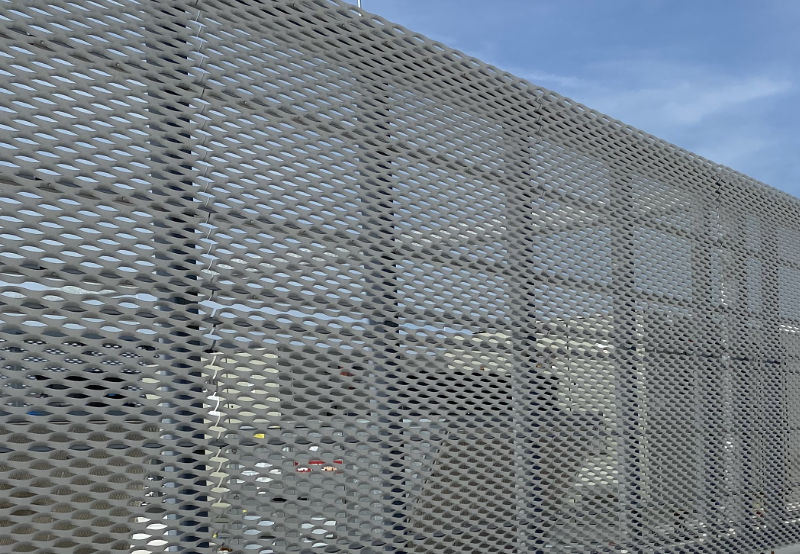
Webforge Locker’s perforated and expanded metal products are widely specified where architects need to balance security, transparency and aesthetics. With extensive pattern, material and finish options, they can be tailored to suit both public-facing and restricted-access environments.
High-Security Solutions: Expanded Security Mesh
Screenshot
For sites requiring a higher level of protection, Webforge Locker’s expanded security mesh provides a proven anti-climb solution.
Originally developed in collaboration with corrective services, this mesh is engineered to:
- Eliminate footholds and handholds
- Resist cutting and deformation
- Deter intrusion through both physical and psychological means
Available in steel or aluminium, with galvanised and coated finish options, expanded security mesh is now used across a wide range of projects—including infrastructure, utilities and secure facilities—where durability and compliance are non-negotiable.
Crime Prevention Through Environmental Design (CPTED) in 2025
Modern security design increasingly aligns with CPTED principles (Crime Prevention Through Environmental Design). Research continues to show that crime is discouraged not only by physical barriers, but by environments that feel visible, well-maintained and actively monitored.
Key CPTED strategies include:
- Clear sightlines and reduced blind spots
- Well-lit circulation paths
- Defined transitions between public and private spaces
- Materials that signal control and care
Architectural screens, balustrades and fencing systems supplied by Webforge Locker are frequently used to reinforce these principles—supporting safer environments without relying solely on surveillance technology.
Smart Design, Safer Buildings
In 2025, building security is no longer about making spaces impenetrable—it’s about making them intentionally designed.
The most effective projects consider:
- How materials influence movement
- How details affect climb ability
- How visibility shapes behaviour
Webforge Locker products are designed to integrate naturally into architectural intent—enhancing safety for occupants while acting as a strong deterrent to unwanted access.
By combining informed design decisions with robust, purpose-built materials, architects can create environments that welcome the public while quietly resisting misuse.
To learn how Webforge Locker architectural products can support security-focused design on your next project, get in touch with our team or explore our range of perforated, expanded and security mesh solutions.

Leave a Reply
You must be logged in to post a comment.