
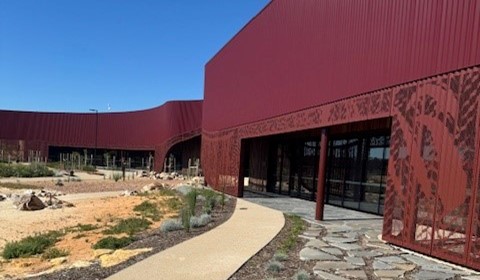
eLEVATING DESIGN IN 2026: Australian manufactured architectural solutions by webforge locker
Architecture continues to sit at the intersection of science, technology and art. In 2026, new developments are being driven by a combination of performance demands, environmental responsibility, digital innovation and evolving expectations around how people live, work and interact with spaces.
While aesthetics remain important, today’s architectural trends increasingly prioritise adaptability, sustainability, wellbeing and long-term value. Understanding these current and emerging directions can help ensure your next facility improves operational efficiency, meets regulatory and environmental goals, and delivers a striking, future-ready design.
Below are some of the most influential architectural trends shaping commercial, industrial and mixed-use projects in 2026 and beyond.
________________________________________
Understanding architectural design trends in 2026
Architectural design has always required a careful balance between intent, functionality, safety and longevity. While trends evolve, the most successful concepts tend to be those that combine visual appeal with practical performance and adaptability over time.
Rather than pushing design to extremes, the trends outlined below reflect a more considered approach—one that integrates emerging technologies, sustainable materials and human-centric design principles to deliver buildings that remain relevant well into the future.
________________________________________

Stronger emphasis on outdoor, transitional and community spaces
The focus on outdoor areas has grown significantly since 2020 and is now considered essential rather than optional. Courtyards, rooftop terraces, atriums, breezeways and semi-enclosed public spaces are being designed as extensions of interior environments rather than afterthoughts. The Adelaide Plaza now has these perforated Hexagonal shaped trees, which not only provide shade but ties itself to the concept of architectural outdoor functional art.
These spaces support:
• Wellbeing and mental health, encouraging access to fresh air and natural light
• Environmental performance, helping with passive cooling and daylighting
• Community connection, offering shared spaces for collaboration, rest and interaction
In commercial and industrial settings, outdoor breakout zones and landscaped buffer areas are increasingly valued by employees, tenants and visitors alike.
Materials such as woven wire, perforated metal and expanded mesh are well suited to these applications. They provide sun screening, airflow, durability and visual interest while maintaining openness and connection to surrounding environments.
________________________________________
Seamless integration of form, function and performance
The long-standing conversation around form versus function has evolved into a more holistic approach: buildings are now expected to perform beautifully.
Architects are increasingly specifying materials and systems that serve multiple roles—enhancing appearance while also contributing to energy efficiency, safety and comfort. This approach reduces unnecessary complexity and helps future-proof buildings against changing requirements.
Perforated metal panels are a strong example of this trend in practice. Their flexibility in pattern, scale and finish allows designers to achieve striking visual outcomes, while their functional benefits—such as solar control, ventilation, acoustic moderation and durability—support building performance and lower operational costs which was achieved here at the Westmead Children’s Hospital Carpark.
________________________________________
Geometry, parametric design and digital expression
Bold geometry remains a defining visual trend, but in 2026 it is increasingly driven by parametric and computational design tools. These technologies allow architects to generate complex, data-informed patterns that respond to light, airflow, sightlines and structural forces.
Clean lines, repeating motifs and sculptural surfaces continue to draw inspiration from modernism and art deco, while advanced fabrication techniques bring a new level of precision and customisation. This façade at Loyola Marymount University is a perfect example of our linear Aurora System
Expanded metal mesh and laser-cut panels align naturally with this movement, enabling intricate geometric designs across facades, screens, balustrades and interior features—without sacrificing strength or longevity.
________________________________________

Sustainability, circular design and material longevity
Sustainability has shifted from a “nice to have” to a baseline expectation. Today’s architectural projects are increasingly evaluated on lifecycle impact, embodied carbon and material reuse potential.
Materials that support circular design principles—those that can be recycled repeatedly without significant loss of quality—are strongly favoured. Aluminium, in particular, remains a standout choice due to its durability, strength-to-weight ratio and near-infinite recyclability. With Aluminium also being a material for conducting heat, which helps dissipate the hot Australian summers and was of particular importance during the design of this façade at Trinity Grammar School with the staff and children being at front of mind.
Laser-cut aluminium panels allow architects to combine sustainability with creativity, producing custom designs that enhance both indoor and outdoor environments while supporting airflow, light penetration and long-term reuse.
________________________________________
Designing for adaptability and future change
One of the most defining trends of 2026 is designing for change. Buildings are increasingly expected to adapt to new uses, technologies and occupancy patterns over their lifespan.
Flexible layouts, modular systems and durable materials help ensure that facilities can evolve without major reconstruction. Architectural elements such as screens, partitions and facades made from perforated or expanded metal can be reconfigured, repurposed or recycled—supporting both operational flexibility and sustainability goals.
________________________________________
Choosing the right trends for your project
While trends are valuable sources of inspiration, the most successful architectural outcomes rarely rely on trends alone. A balanced approach—combining timeless design principles with carefully selected contemporary elements—often delivers the best long-term results.
Whether you’re developing a new facility or refining an existing design, integrating performance-driven materials and forward-thinking concepts can help create buildings that are efficient, compliant, visually compelling and built to last.
________________________________________
Partnering with Webforge Locker for future-ready architecture
Webforge Locker brings decades of experience, deep technical expertise and a proven ability to deliver innovative architectural solutions. Our visually striking Pic Perf range, along with our expanded and perforated metal capabilities, allows architects and builders to realise bold ideas without compromising on performance or durability.
With a long-standing presence in the industry, Webforge Locker is a dependable partner for projects that demand both creativity and precision.
To learn more about how we can support your next construction project, get in touch with us today.

Leave a Reply
You must be logged in to post a comment.